
Understanding Coffee Quality in Indonesia
Green Coffee Beans quality in Indonesia is evaluated using a standardized grading system based on physical defects, moisture content, and bean size. This system follows the Indonesian National Standard (SNI 01-2907-2008), which aligns with international quality practices and has evolved alongside global coffee market requirements.
The grading process ensures consistency in export quality and provides buyers with a clear benchmark when sourcing Indonesian coffee.
General Quality Requirements
Before grading by defects, all green coffee beans must meet basic physical standards:
- Moisture content: maximum 12.5%
- No live insects
- No moldy or rotten odor
- Foreign matter: maximum 0.5%
These parameters ensure that the coffee is stable, clean, and suitable for storage and export.
Defect-Based Grading System
Indonesia uses a defect value system, where each type of defect is assigned a numerical value. The total defect score is calculated from a 300-gram sample, and this determines the final grade of the coffee. Applicable for Arabica & Robusta Coffee.
Green Coffee Beans Grades (Based on Total Defect Value)
| Grade | Defect Value |
|---|---|
| Grade 1 | Max. 11 |
| Grade 2 | 12 – 25 |
| Grade 3 | 26 – 44 |
| Grade 4 | 45 – 80 |
| Grade 5 | 81 – 150 |
| Grade 6 | 151 – 225 |
In general:
- Grade 1–2 → Export-quality coffee
- Grade 3–4 → Commercial and mid-range coffee
- Grade 5–6 → Lower-grade or industrial use
Defect Value of Coffee Beans
| No | Type of Defect | Defect Value |
|---|---|---|
| 1 | 1 black bean | 1 |
| 2 | 1 partially black bean | 1/2 |
| 3 | 1 broken black bean | 1/2 |
| 4 | 1 parchment coffee | 1 |
| 5 | 1 brown bean | 1/4 |
| 6 | 1 large coffee skin | 1 |
| 7 | 1 medium coffee skin | 1/2 |
| 8 | 1 small coffee skin | 1/5 |
| 9 | 1 horn-skinned bean | 1/2 |
| 10 | 1 large horn skin | 1/2 |
| 11 | 1 medium horn skin | 1/5 |
| 12 | 1 small horn skin | 1/10 |
| 13 | 1 broken bean | 1/5 |
| 14 | 1 immature bean | 1/5 |
| 15 | 1 bean with one hole | 1/10 |
| 16 | 1 bean with more than one hole | 1/5 |
| 17 | 1 spotted bean | 1/10 |
| 18 | 1 large twig, soil, or stone | 5 |
| 19 | 1 medium twig, soil, or stone | 2 |
| 20 | 1 small twig, soil, or stone | 1 |
Note: The total defect value is calculated from a 300-gram sample. If one coffee bean has more than one defect value, the highest defect value is used.
Source: Asosiasi Eksportir dan Industri Kopi Indonesia (AEKI)
Bean Size Classification
Coffee beans are also sorted by screen size, which refers to the diameter of the beans using standardized sieves.
Typical ranges include:
- Screen 15–16 (6.0 – 6.5 mm) → Medium size
- Screen 17–18 (6.75 – 7.0 mm) → Large size
- Screen 19+ (7.5 mm and above) → Premium large beans
Bean size does not directly determine flavor, but it contributes to roasting consistency and visual quality.
Specialty Coffee Grading (SCA Standard)
In addition to physical grading for green coffee beans, coffee is also evaluated through cupping after roasted, following standards established by the Specialty Coffee Association (SCA).
Specialty Coffee Score Scale
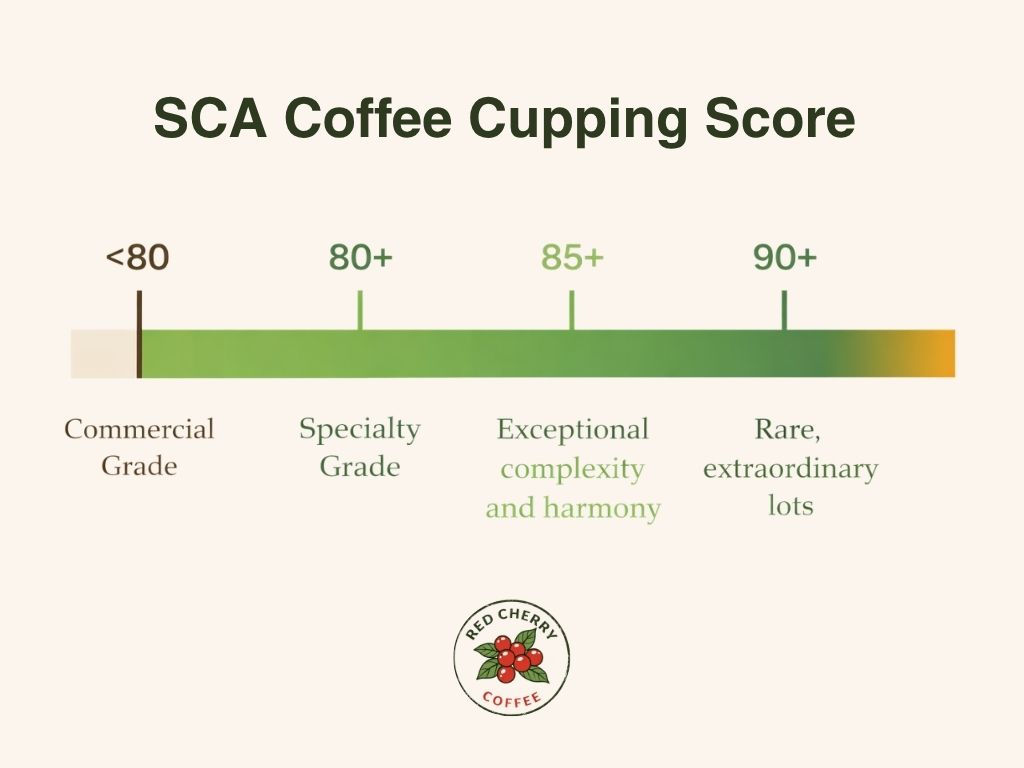
| Score | Category | Description |
|---|---|---|
| 90 – 100 | Outstanding | Exceptional quality, highly complex |
| 85 – 89.99 | Excellent | High-quality with minimal defects |
| 80 – 84.99 | Very Good | Specialty grade with minor imperfections |
| 70 – 79.99 | Below Specialty | Noticeable defects or limited character |
| <70 | Commercial / Off Grade | Low quality, significant defects |
Coffee must score 80 points or above to be classified as specialty coffee.
Key Factors in Cupping Evaluation
Specialty grading is based on multiple sensory attributes:
- Fragrance & aroma
- Flavor
- Aftertaste
- Acidity
- Body
- Balance
- Sweetness
- Clean cup
- Uniformity
- Defects
These elements determine the overall quality and market value of the coffee.
How We Apply This at Red Cherry Coffee
At Red Cherry Coffee, we apply both:
- Indonesian defect grading system (SNI)
- Specialty cupping evaluation (SCA standard)
This dual approach allows us to:
- Maintain export-grade consistency
- Offer specialty-quality selections (82–85+)
- Match coffee profiles with buyer requirements
Each lot is evaluated to ensure it meets both physical standards and cup quality expectations before being offered to our customers.
Practical Understanding for Buyers
When sourcing coffee from Indonesia:
- Grade (defect value) = physical cleanliness
- Cupping score = flavor quality
Both are important, but for specialty buyers, cupping score is the primary indicator of value, while defect grading ensures baseline quality.